
Montego Bay, Jamaica: A Complete Guide to the Island’s Tourism Capital
Montego Bay has been the heartbeat of Jamaican tourism for generations. For many visitors, it is their first real look at the island — the first warm air after landing, the first sea view, and the place where beaches, history, nightlife, and local energy all meet.
Why Montego Bay still matters
Montego Bay is more than a resort town. It is the place that has carried Jamaican tourism for decades. It has the airport, the cruise port, the beaches, the hotel zones, the golf courses, and the kind of location that makes the rest of the north coast feel within reach.
What makes it work is balance. You can keep things slow and easy, or fill your days from breakfast to midnight. One trip can be about sea and sunshine. Another can be about food, music, shopping, and day tours. Montego Bay handles both without feeling overbuilt or one-dimensional.
It also suits first-time visitors. You arrive easily, settle in quickly, and understand the rhythm of the place without much effort. That accessibility is a big reason Montego Bay has remained one of the Caribbean’s most recognizable destinations.
How Montego Bay got its name
Montego Bay sounds elegant today, but the name has rougher origins. Christopher Columbus referred to the area as Golfo de Buen Tiempo, or “Fair Weather Gulf,” but another Spanish term became more closely tied to the place over time. The area was associated with wild pigs, and their fat was exported to be turned into lard. The Spanish word manteca became part of the bay’s old identity.
After the English captured Jamaica in 1655, that older Spanish sound gradually shifted. Over time, it evolved into Montego Bay. It is one of those names that carries beauty and hard colonial history at the same time.
That contrast still fits the city. Montego Bay is polished in many ways, but underneath it is a place with real history, trade, and a story that began long before tourism ever took over the shoreline.
Doctor’s Cave and the beginning of tourism
If one place helped put Montego Bay on the map, it was Doctor’s Cave Beach. In 1906, Dr. Alexander James McCatty donated the beach to the community, and a bathing club was formed. That club still exists today, and the beach remains one of the best-known landmarks in the city.
The real turning point came in the 1920s, when Sir Herbert Barker wrote about the water and its supposed curative qualities. That kind of attention mattered in that era. It gave Montego Bay a mystique, and people began arriving not just for the climate, but for the feeling that this was a place with something special.
Even now, Doctor’s Cave is more than a beach stop. It is part of the origin story of Montego Bay as an international resort destination.
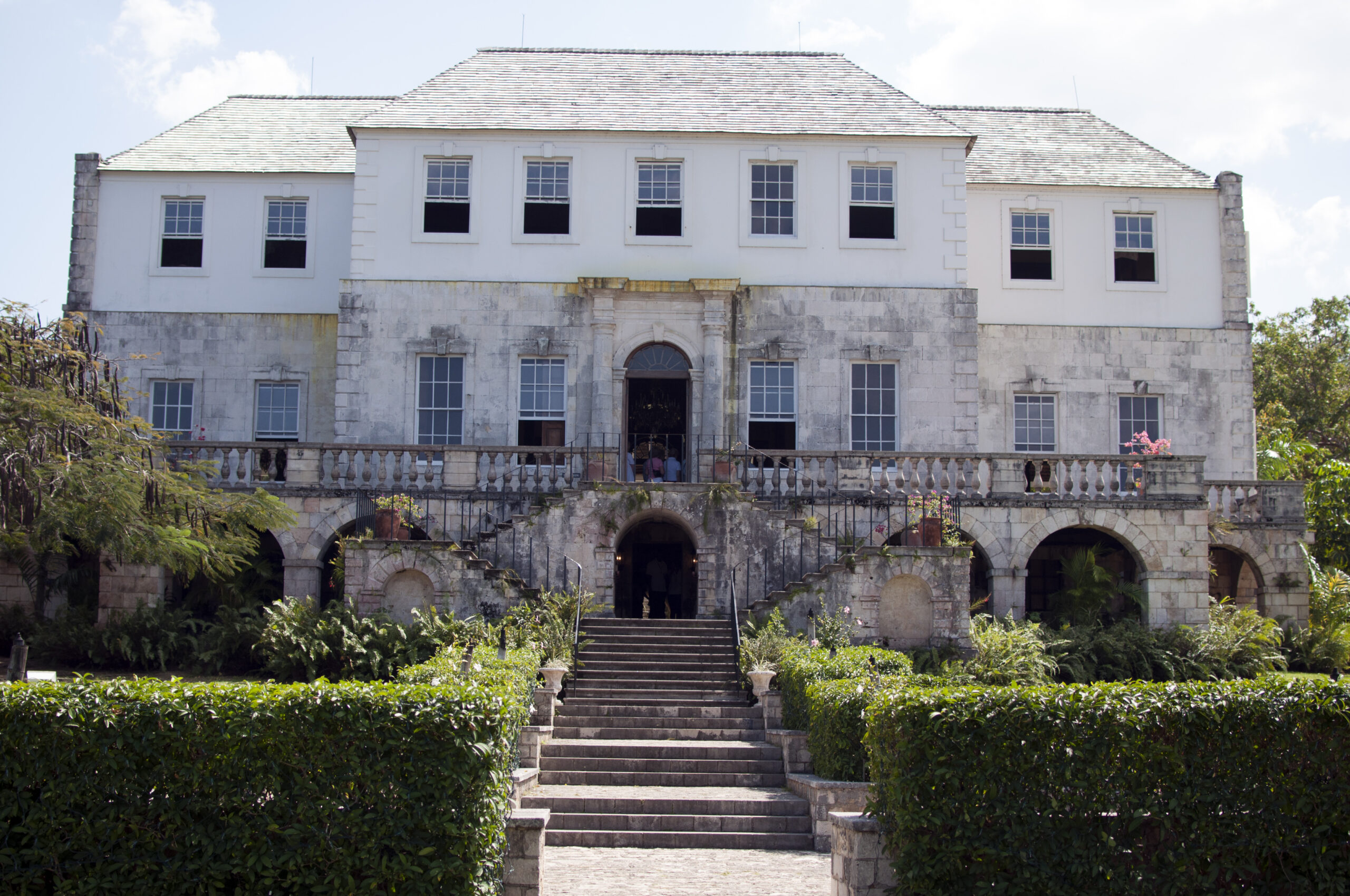
History still lives here
Montego Bay is not only about beaches and resorts. Nearby places like Rose Hall remind visitors that this part of Jamaica also has deep plantation-era history, old legends, and landmarks that give the region another layer of meaning.
More than a beach town
One of Montego Bay’s strengths is that it does not depend on one idea. Yes, it is known for beaches, sunshine, and easy arrivals, but it also offers history, old great houses, food culture, local street life, golf, shopping, nightlife, and adventure.
That is why the city appeals to so many different kinds of travelers. Some people come for pure rest. Others want movement, music, and energy. Montego Bay gives both, and that flexibility is a big part of why it has stayed relevant for so long.
It also feels connected to the rest of Jamaica. Even in the resort zones, it never takes much to feel the pulse of the island around you.
The gateway city of Jamaica
For many people, Montego Bay is their first real moment in Jamaica. You land at Sangster International Airport, step outside, and everything changes at once — the light, the air, the sound, the pace.
The city’s role as a gateway is one of the biggest reasons it matters. It is built to receive visitors, whether they are staying in Montego Bay itself or using it as a jumping-off point for Rose Hall, Negril, Falmouth, Lucea, or farther east along the north coast.
That kind of access makes trip planning easier. It also helps explain why Montego Bay is the place many travelers associate first with Jamaican tourism.
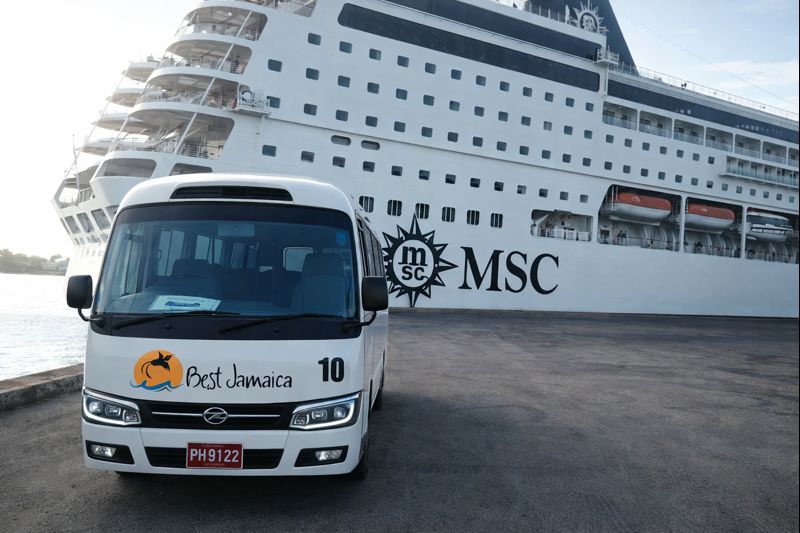
A city built for arrivals
Montego Bay’s cruise port adds another layer to the city’s tourism story. Cruise visitors get a shorter taste of the region, but even in a few hours they can feel the energy of the bay, the shopping areas, and the easy access to nearby experiences.
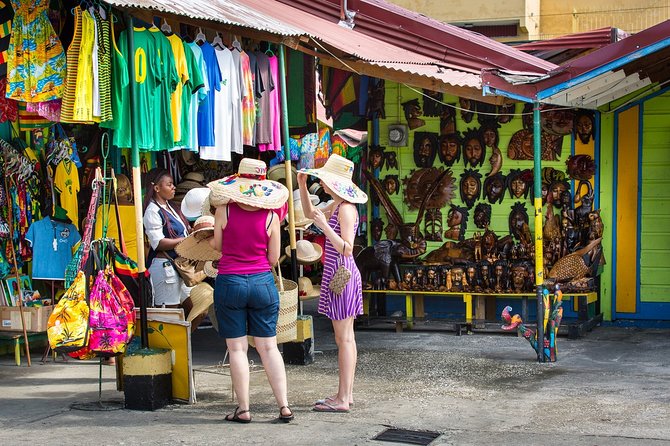
Shopping with local flavor
Shopping in Montego Bay can be casual, lively, and very Jamaican. From craft markets to duty-free stops and small specialty shops, the city gives visitors plenty of chances to browse, bargain, and carry a little piece of the island home.
Shopping, crafts, and city personality
Montego Bay has long been one of Jamaica’s strongest shopping centers for visitors. That does not just mean duty-free goods. It also means craft stalls, handmade items, local fashion, souvenirs, carvings, woven products, spices, and small objects that travelers like to take home because they feel tied to a place.
What makes shopping here enjoyable is that it often happens in the middle of everything else. You might stop after the beach, before dinner, or while walking through a busy part of town. It feels like part of the life of the city instead of a separate chore.
That is also true of Montego Bay in general. It feels active. It feels lived in. It feels like more than a resort zone.
What Montego Bay actually feels like
The best way to describe Montego Bay is to say that it feels open. The city has movement, but it is not stiff. It has resort polish, but it still feels Jamaican. You can be near a modern hotel one minute, then catch a glimpse of everyday street life, hear music drifting through the air, or stop somewhere simple for something good to eat.
That is part of the charm. Montego Bay does not feel sealed off from the island around it. Even when you are doing classic visitor things — beach clubs, shopping, dinner, marina views — there is still a sense that real life is close by.
For a lot of travelers, that is exactly why the city stays with them. It feels easier than some places, but not empty. It feels polished, but not detached.
See the rhythm of the bay
Video helps with Montego Bay because the place is about motion as much as scenery. The light changes fast, the coastline opens up in layers, and the whole city has a flow that static images do not fully capture.
Nightlife, food, and the Hip Strip
Montego Bay has always had a social side. Gloucester Avenue, better known as the Hip Strip, remains one of the city’s most familiar stretches. It is where restaurants, bars, beach access, shopping, music, and nighttime energy all seem to gather.
The nice thing about Montego Bay after dark is that it can go in different directions. Some nights are relaxed and easy, built around dinner and a walk by the sea. Other nights are louder, later, and more about live music, drinks, dancing, and that open-air island feeling.
Food matters just as much. Montego Bay gives visitors easy access to Jamaican staples like jerk, curry goat, patties, roast fish, fresh fruit, seafood, and a wide range of local and international dining.
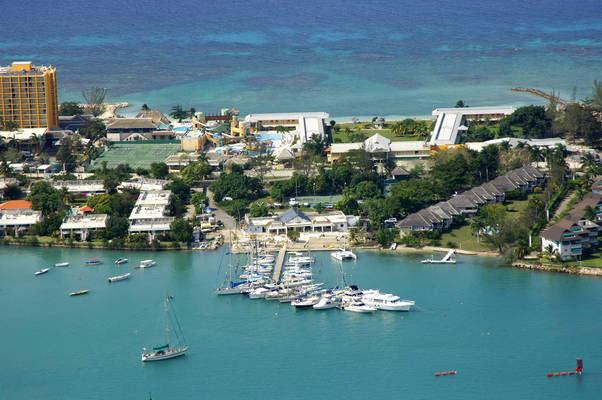
The polished side of the bay
Montego Bay can feel refined without losing its island identity. Places like the Yacht Club show the city’s calmer side, where harbor views, boats, and sea light add another texture to the wider Montego Bay experience.
Things to do in and around Montego Bay
Montego Bay gives visitors more than enough to do without ever leaving the region. Beaches, snorkeling, catamaran cruises, golf, rafting, tubing, zipline parks, horseback rides, historical sites, and day excursions all fit naturally into a stay here.
It is also one of the easiest places in Jamaica from which to build a mixed itinerary. You can have a beach morning, a countryside afternoon, and a lively evening all in the same day. That is part of what makes Montego Bay feel complete.
And if you want to explore beyond the city, its location helps. Negril is to the west, while Ocho Rios lies farther east. Montego Bay sits in a useful middle position, which makes it a smart base for travelers who do not want to feel boxed into one zone.
Why people keep coming back
Montego Bay is not memorable because it is perfect. It is memorable because it has range. It can feel easy and exciting at the same time. It can be beautiful, busy, laid-back, historic, and modern all in one trip.
For some travelers, Montego Bay becomes the whole vacation. For others, it becomes the place they start and then compare the rest of Jamaica against. Either way, it leaves an impression.
That is why Montego Bay has held its place for so long. It welcomes people in a way that feels natural. It gives them options. And it still carries that unmistakable sense that Jamaica is not far away from where they stand — it is right there in the air, the food, the sound, and the pace of the city.
Why Montego Bay remains one of Jamaica’s most complete destinations
- It combines airport access, cruise access, beaches, food, nightlife, shopping, and excursions in one place.
- It has real tourism history, especially through Doctor’s Cave Beach and the early rise of health and leisure travel.
- It works for first-time visitors, couples, families, groups, and repeat travelers.
- It feels both international and Jamaican, which is a big part of its charm.
- It remains one of the best places to begin understanding the wider island.
Related reading
Montego Bay is one of those places that makes sense almost immediately. You arrive, feel the warmth, hear the city, catch sight of the sea, and understand why so many people have chosen it as their Jamaican base over the years.