
Jamaican Music
Jamaican music is one of the island’s greatest gifts to the world. From mento and ska to rocksteady, reggae, dub, and dancehall, it carries memory, struggle, celebration, rebellion, faith, style, and invention — all in rhythm.
More Than Entertainment
Jamaican music is not just a soundtrack. It is a record of the island’s social life, a voice for ordinary people, a tool of identity, and one of the clearest ways Jamaica has shaped the wider world. Its rhythms have moved dance floors, protests, churches, street corners, studios, and radio stations for generations.
What makes it especially powerful is that Jamaican music did not grow in isolation. Jamaica absorbed sounds from abroad, especially American rhythm and blues, then transformed them into something distinct. Later, the world came back and borrowed from Jamaica in return.
Where Jamaican Music Begins
Jamaican music grew from many streams at once: African memory, European folk elements, church music, work songs, street performance, sound system culture, imported records, and the lived experience of black Jamaicans making meaning from pressure, wit, hardship, faith, and joy.
Mento was one of the island’s earliest popular forms — witty, rhythmic, often playful, and deeply local. Then came ska, fast and bright, filled with the energy of a country moving toward and through independence. Rocksteady slowed that pulse and gave it more soul. Reggae deepened the message, sharpened the bass, and became a vessel for spirituality, culture, and social commentary.
Later, dub turned the studio itself into an instrument, and dancehall pushed the music back into the streets with harder rhythms, sharper delivery, and direct connection to everyday Jamaican life.
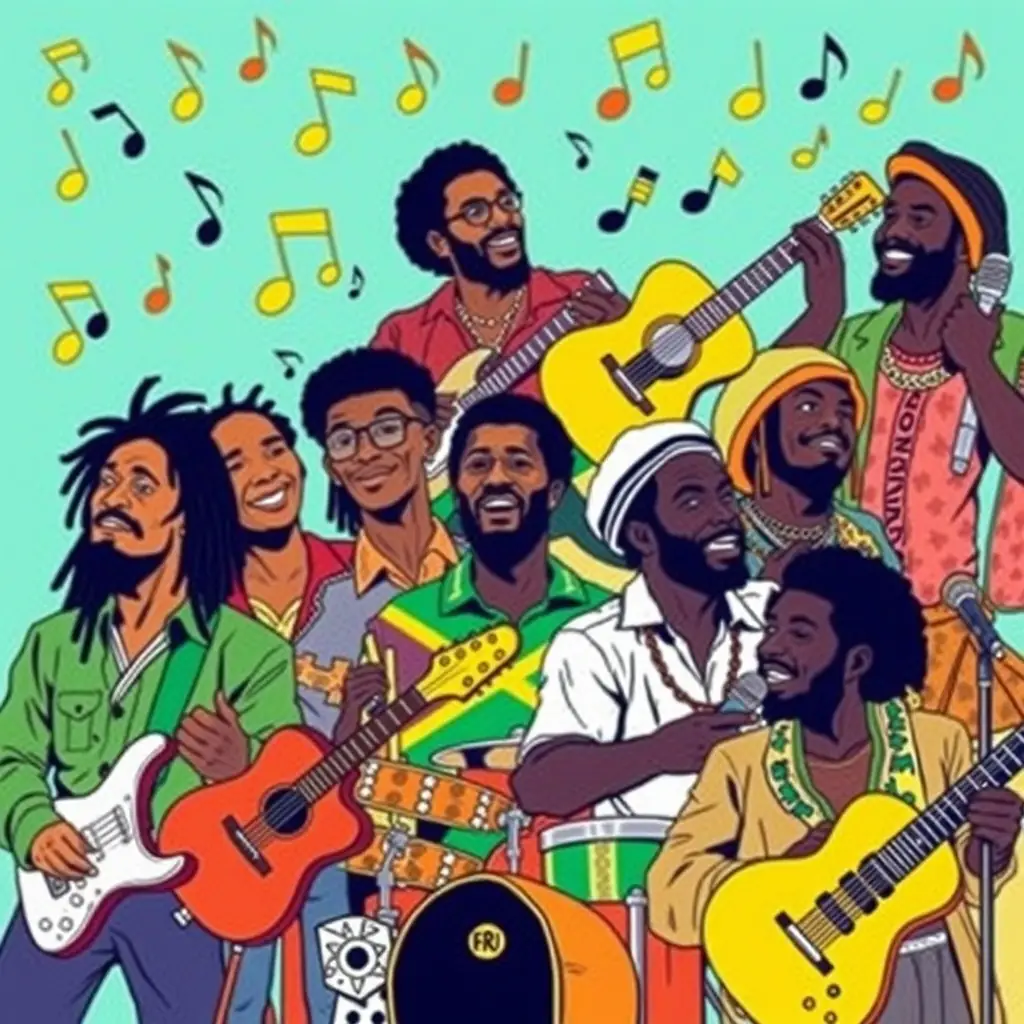
The Main Eras of Jamaican Music
Each phase changed the tempo, the mood, or the message, but together they form one long musical conversation.
Mento
Jamaica’s early popular folk music, built around acoustic instruments, sharp humor, local storytelling, and everyday observation. Mento gave listeners something recognizably Jamaican long before reggae became global.
- Acoustic, witty, often satirical
- Strong local identity
- A bridge between folk tradition and recorded popular music
Ska
Fast, upbeat, horn-driven, and urban. Ska reflected youth energy, dance culture, and the sound of Jamaica in a moment of historic transition.
- Strong offbeat rhythm
- Deep links to dance and street life
- Associated with groups such as The Skatalites and figures like Prince Buster
Rocksteady
Slower and more soulful than ska, rocksteady gave space to vocal harmony, emotion, and lyrical feeling. It became an essential bridge to reggae.
- More spacious groove
- Romance, hardship, and urban feeling
- Artists such as Alton Ellis and The Paragons helped define the era
Reggae
Reggae sharpened the bass, deepened the drum feel, and opened space for spiritual, political, and social messages. It became Jamaica’s strongest global voice.
- Rastafarian influence and social consciousness
- Associated with Bob Marley, Peter Tosh, Burning Spear, and many others
- Changed global understandings of protest music and black consciousness
Dub
Dub pulled tracks apart and rebuilt them through echo, bass, delay, and studio manipulation. It changed not only reggae, but modern production itself.
- Heavy bass and reverb
- Studio experimentation
- Closely associated with innovators such as King Tubby and Lee “Scratch” Perry
Dancehall
Dancehall pushed the music back toward direct speech, harder rhythm, and street immediacy. It became one of the most influential Jamaican forms in modern popular music.
- Faster, rawer, more digital in later phases
- Deeply tied to deejay culture and performance
- From Yellowman and Shabba Ranks to Sean Paul and Shenseea
Jamaica and America Shaped Each Other
Jamaican music did not appear out of nowhere. It absorbed outside influence, especially from the United States, then returned that influence to the world in transformed form.
How America influenced Jamaica
In the early years, American rhythm and blues played heavily on Jamaican radio and sound systems. Local musicians listened closely. They borrowed lyrics, melodic ideas, and the feel of those records, then sang them over local rhythms and reworked them into something rooted in Jamaica.
Over time, the music grew more original, more self-aware, and more revolutionary. As Rastafari gained strength, many musicians moved away from simply adapting imported songs and began writing directly from Jamaican life — culture, faith, poverty, politics, dignity, and black consciousness.
How Jamaica influenced America
Once reggae, dub, and dancehall matured, the exchange ran the other way too. Jamaican basslines, offbeat rhythm, vocal delivery, sound system energy, remix culture, and deejay performance style fed directly into pop, hip-hop, electronic music, reggaeton, and global club music.
What began as a small island’s local sound became one of the most borrowed, reinterpreted, and referenced musical languages in the modern world.
Toasting, Sound Systems, and the Road to Rap
One of the most important Jamaican contributions to modern music lies in deejay culture. In the late 1960s and 1970s, 45 rpm records commonly had an A-side with the vocal track and a B-side with the instrumental. On sound systems, selectors and deejays would play the vocal side, then flip to the instrumental. Over that stripped-down rhythm, the deejay would speak, boast, comment, rhyme, chant, and improvise on the mic.
In Jamaica this was called toasting. It was performance, rhythm, personality, crowd control, and lyrical invention at once. U-Roy became one of the early figures to make major inroads on the Jamaican charts through that style, helping prove that the deejay voice itself could be the attraction.
That history matters because it places Jamaica close to the roots of what much of the world now recognizes as rap-style vocal delivery. The American form later became its own huge world, but the Jamaican sound system tradition was one of the foundational spaces where talking rhythmically over records became a powerful musical act.
When the Music Became More Revolutionary
As the island moved through political pressure, social inequality, and the rise of Rastafarian thought, Jamaican music deepened. Reggae in particular became a vehicle for self-definition and resistance. Musicians stopped leaning so heavily on borrowed lyrical material and increasingly wrote from lived experience.
That shift gave Jamaican music a new moral and emotional weight. Songs were no longer only for dancing or diversion. They became commentary, warning, prayer, argument, testimony, and cultural memory.
That is one reason reggae still matters so much: it carried the island’s voice outward without losing the ground beneath it.
What Jamaican Music Gave the World
Jamaica’s influence can be heard not only in reggae records, but in production, rhythm, phrasing, bass culture, remix practice, and vocal attitude across multiple genres.
Bass as identity
Jamaican music made bass feel central, not secondary. That shift changed how people listened to rhythm and low-end power.
Studio experimentation
Dub helped redefine the recording studio as a creative instrument, not just a place to document a song.
Vocal delivery
Deejay phrasing, chant style, call-and-response, and rhythmic speech fed directly into later vocal forms around the world.
Remix culture
Versioning, reworking riddims, and building multiple songs from one rhythmic foundation became part of global music practice.
Political music
Reggae proved that a song could be spiritually grounded, socially conscious, and still globally resonant.
Style and attitude
From dancehall fashion to sound system intensity, Jamaica influenced not only sound, but posture, language, and performance energy.
Artists and Acts Touched by Reggae, Dub, or Dancehall Influence
Jamaican music has been sampled, covered, echoed, borrowed from, or directly blended by artists across soul, pop, hip-hop, rock, and electronic music. The influence reaches widely — not only through direct samples, but through rhythm, bass, phrasing, and production style.
Why Jamaican Music Still Matters
Jamaican music matters because it is both local and world-changing at the same time. It came from a specific people, a specific island, and a specific struggle — but it never stayed there. It traveled because the sound was compelling, the rhythm was undeniable, and the message was human. Few places have given the world so much musical vocabulary from such a small geographic space. Jamaica did.